
Flavor Sensory Brief: Examples and Checklist
Define a strawberry or watermelon sensory direction, separate product-base requirements from aroma goals and copy an illustrative flavor brief.
Natürlich Editorial · October 10, 2026
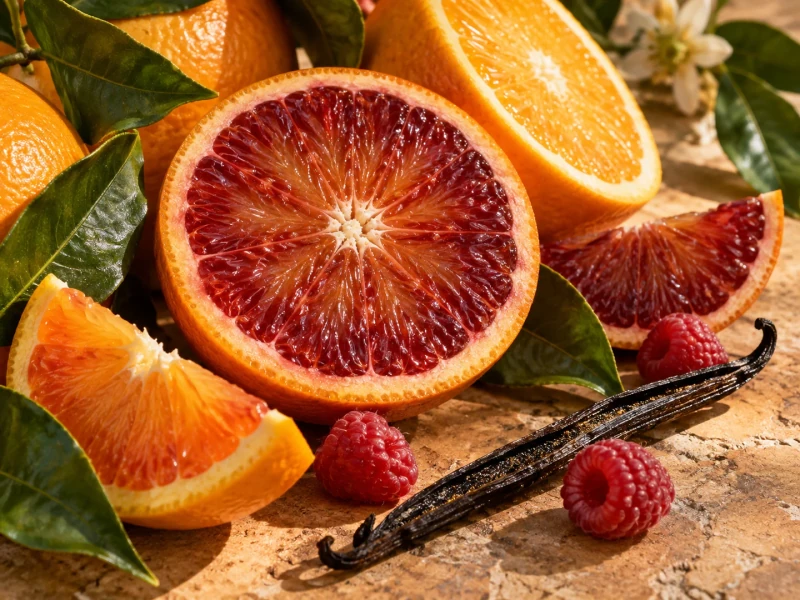
A useful flavor brief describes the sensory result you want in a specific finished product. A product name alone does not tell the team whether you want a fresh fruit impression, a ripe profile or a confectionery direction.
1. Choose words that describe your target
The examples below are illustrative sensory language. They are not descriptions of the composition, carrier, natural classification or performance of Natürlich products.
| Direction | Illustrative strawberry target | Illustrative watermelon target |
|---|---|---|
| Fresh | Fresh berry aroma with a light green note | Juicy melon aroma with a light rind-like note |
| Ripe | Fuller ripe-berry character and a rounded finish | Ripe melon character with a fuller fruit impression |
| Jammy or cooked | Cooked-berry or jam-like character | A cooked-melon direction, if that matches your benchmark |
| Confectionery | A recognizable strawberry-candy impression | A recognizable watermelon-candy impression |
Choose one primary direction and state what should be reduced or avoided. Keep the sweetness, acidity and body of the finished product in your brief alongside the aroma target, rather than treating them as a description of the flavor ingredient itself.
2. Check the application information
| Brief item | What to provide or ask |
|---|---|
| Product base | Name the beverage or food, key base ingredients and intended serving format |
| Sensory benchmark | Identify a reference product or internal sample and the qualities to retain or change |
| Processing | Describe your preparation steps and when you plan to introduce the flavor |
| Available ingredient format | Ask which formats are available for the named product; do not infer a carrier or solubility from its name |
| Formulation restrictions | State your own ingredient, carrier or labeling requirements so they can be discussed |
| Destination market | Give the intended country or region and the documentation your team needs to assess |
| Evaluation method | Identify the base formulation, preparation method and questions you will use to compare samples |
Browse Strawberry Flavor and Watermelon Flavor for the current product identities. The flavor catalog lists the available names; product-specific composition and format need to be confirmed directly.
3. Copy an illustrative sensory brief
The following is a hypothetical project example. The sensory descriptions are a buyer’s desired direction, not a claim about an existing Natürlich formulation. Replace the example with your actual requirements.
Subject: Strawberry flavor inquiry — illustrative beverage project

Finished product: A fruit-style beverage under development
Candidate name for discussion: Strawberry Flavor
Primary sensory target: Fresh berry aroma with a light green note
Secondary target: A rounded fruit finish in the finished beverage
Reduce or avoid: A dominant cooked-jam or candy-like impression
Benchmark: Our internal reference sample; details to be supplied
Product base: To be supplied with the formulation brief
Sweetness, acidity and body targets: To be defined by our product team
Processing and addition point: To be supplied before sample selection
Required ingredient format and carrier restrictions: To discuss
Labeling requirements and destination market: To be confirmed
Documents needed: Current product information for our review
Trial comparison: Same base and preparation method for each sample
Sample format, quantity and availability: To discuss and confirm
For a watermelon project, replace the candidate name with Watermelon Flavor and describe the melon direction you want. Avoid simply substituting a fruit name while leaving an unrelated benchmark or sensory target in the brief.
4. Send feedback that can guide a second trial
Use the same questions for each sample and separate what you observed from the change you want.
| Review point | Useful feedback format |
|---|---|
| Aroma character | “The sample is closer to [direction] than our [reference].” |
| Relative intensity | “In our recorded base and preparation method, the aroma is [lighter / stronger] than the reference.” |
| Finish | “We notice [observation] after tasting; we want [target].” |
| Next adjustment | “Retain [quality] and reduce or change [quality].” |
Keep the sample reference and your own trial conditions with the feedback. Use the evaluation record to track comparisons, then send your brief or observations through email inquiry.