
Natural Color Selection Checklist and Email Brief
Build a natural color shortlist, check the information needed for selection and copy a structured email brief for your formulation project.
Natürlich Editorial · October 15, 2026
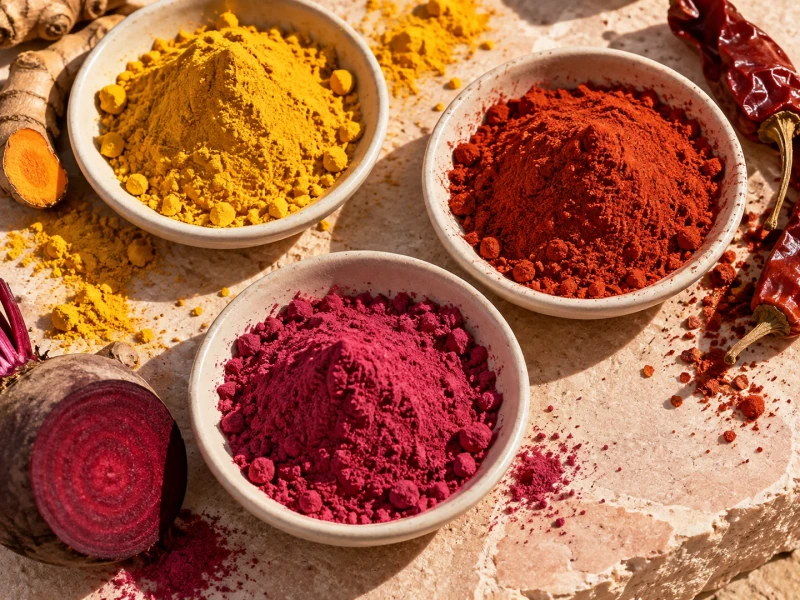
Use this worksheet to turn a target shade into a clear ingredient inquiry. Start with the finished product, then identify the information you need before choosing a sample.
1. Build a color shortlist
The natural food color catalog provides product identities and known characteristics. Use these names to organize an initial comparison.
| Target direction | Products to review | Information to carry into your brief |
|---|---|---|
| Red to purple | Beet Red and Purple Sweet Potato | Desired shade, product base and the reference you will compare against |
| Yellow | Gardenia Yellow and Safflower Yellow | Desired yellow tone and the current product format you need to discuss |
| Blue | Gardenia Extract (Blue) | Target shade and the formulation and process in which it will be evaluated |
| Green to blue-green | Sodium Copper Chlorophyllin | Intended appearance, product base and evaluation conditions |
A color direction helps make a shortlist; it does not establish suitability in your formulation. Confirm the current product information and format with our team.
2. Complete the selection checklist
| Check | Record in your brief | Decision it supports |
|---|---|---|
| Finished product | Product category, intended format and how it will be prepared or consumed | Defines the application being discussed |
| Color target | Reference image or sample; desired shade, intensity and opacity | Gives the evaluation a consistent visual target |
| Product base | Relevant ingredients, liquid or dry format, and any formulation restrictions | Makes the sample evaluation specific to your product |
| Processing | Addition point and your actual mixing, heating, cooling or drying steps | Identifies the conditions the sample will encounter |
| Product environment | Measured pH if available, proposed storage conditions and intended packaging | Records your project conditions without assuming product performance |
| Documentation | Product specifications, origin information or other documents your team needs to review | Creates a clear request; availability must be confirmed |
| Commercial context | Destination market, project timing and expected order quantity if known | Frames the technical and commercial discussion |
| Trial plan | What you will compare, the reference sample and the material needed for that work | Helps you discuss sample requirements without assuming availability |
Use “not yet measured” or “to confirm” for an unknown field. A missing value is more useful than a guessed specification.
3. Copy this plain-text email brief
Replace the bracketed fields with your own project information. This is a blank briefing template, not a recommended formulation or processing specification.
Subject: Natural color selection — [project / product name]

Company and contact: [company, name, email]
Finished product and format: [what you are developing]
Candidate ingredient(s): [product names, or ask for a discussion]
Target appearance: [shade, intensity, opacity, reference attached]
Product base and restrictions: [relevant formulation details]
Processing and addition point: [your process; unknown items marked]
Measured pH, if available: [your measured value / not yet measured]
Storage and packaging being evaluated: [your intended conditions]
Destination market: [country or region]
Documents requested: [list the information needed for your review]
Sample evaluation purpose: [what the trial needs to establish]
Sample quantity and format requested: [to discuss and confirm]
Project timing and expected order quantity: [if known]
Open questions: [items to resolve before the trial]
4. Define the next decision
Before evaluating a sample, agree on the comparison: target appearance, behavior during your process and observations under your chosen storage conditions. Record the formulation revision, sample reference and trial conditions so you can explain the result.
Use the sample evaluation record to document the trial. Send your completed brief through email inquiry, or review the full product catalog if you still need to identify an ingredient.